Showing posts with label Hanuman Temples. Show all posts

Friday, February 28, 2025

Hanuman Temple, Wari, Maharashtra

Hanuman Temple, Wari, Maharashtra

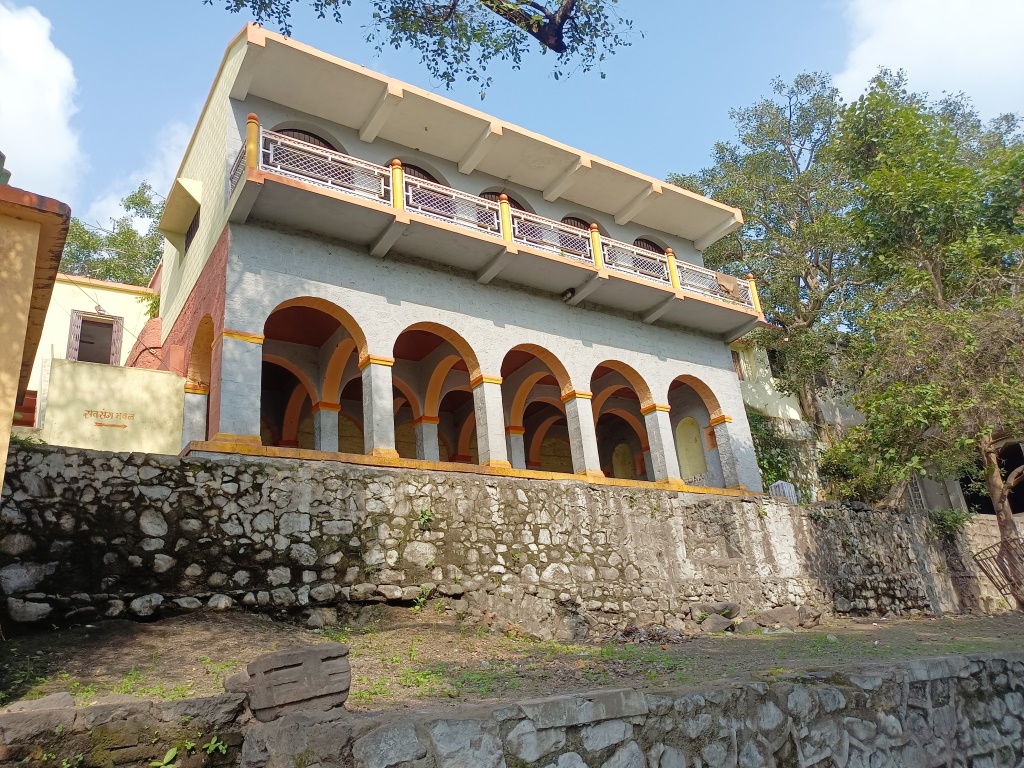
Hanuman Temple is a Hindu Temple dedicated to Lord Anjaneya located in Wari Village in Telhara Taluk in Akola District in the Indian state of Maharashtra. The temple is situated on the banks of the Wan River. The Temple is located on the border of Akola, Amravati, and Buldhana Districts. The temple is said to have been built in 1644 CE by Samarth Ramdas Swami, the Guru of Maratha Emperor Shivaji Maharaj. The temple complex covers an area of about one acre. The sanctum enshrines an image of Hanuman. There is a shrine dedicated to Lord Rama in the temple premises.


Connectivity

The temple is located at about 8 Kms from Warkhed, 27 Kms from Telhara, 35 Kms from Akot, 35 Kms from Akot Railway Station, 38 Kms from Jalgaon Jamod and 278 Kms from Nagpur Airport. The temple is situated at about 8 Kms to the north of Warkhed on Akot to Jalgaon Jamod route.

Location

Sunday, August 13, 2023

Sankat Mochan Temple, Shimla, Himachal Pradesh

Sankat Mochan Temple, Shimla, Himachal Pradesh

Sankat Mochan Temple is a Hindu Temple dedicated to Lord Hanuman located in Shimla City in Shimla District in Himachal Pradesh, India. This temple is second most visited Hanuman temple in Shimla after the Jakhu Temple. The temple is situated at an altitude of about 1,975 m above sea level on Kalka-Shimla highway.


History

Neem Karoli Baba / Neeb Karori Baba was a Hindu guru and a devotee of the Hindu deity Hanuman. He is known outside India for being the spiritual master of a number of Americans who travelled to India in the 1960s and 70s. Neem Karoli Baba visited Shimla during 1950’s and was awestruck by the beauty of Shimla. He spent two weeks in the forest area in Shimla doing yoga and meditation. He told his followers about his wish to build a temple dedicated to Lord Hanuman in this place. Eventually in the year of 1962 the then Lieutenant Governor Raja Bajrang Bahadur Singh and other followers started the construction of the temple. The temple was inaugurated on 21 June 1966 on the day of Tuesday.


The Temple

The temple spreads over an area of about 3.75 acres and situated amidst the natural forested environment. The temple is situated at an altitude of about 1,975 metres. The main shrine is dedicated to Lord Hanuman. There are shrines for Shiva, Rama, Ganesha and Navagrahas in the temple premises. The temple dedicated to Lord Ganesha has been built in the South Indian style of architecture. The temple complex also has a separate shrine for Baba Neeb Karori Ji Maharaj.


The temple has a three storey building consisting of several facilities for the convenience of the devotees. There is a Langar hall in the building used for distributing the prasad. There is a marriage hall for conducting marriages at a nominal fee. The rest of the building is the residential complex of the priests and the staffs of this temple. The temple also has an Ayurvedic clinic and thirty well maintained toilets. The magnificent view of the Shimla City can be seen from this temple.


Temple Opening Time

During winters, the temple remains open from 07.00 AM till 06.30 PM and during summers, the temple remains open from 06.30 AM till 08.00 PM.

Festivals

Dusshera, Rama Navami and Vinayagar Chathurthi are the famous festivals celebrated here. People throng this temple during Tuesdays, Saturdays and Sundays.

Connectivity

The temple is located at about 2 Kms from Taradevi Railway Station, 4 Kms from Shimla New Bus Stand, 6 Kms from Shimla Railway Station, 7 Kms from Shimla Old Bus Stand, 15 Kms from Shimla Airport and 37 Kms from Solan. The temple is situated on Shimla to Solan route.

Location

Sunday, June 6, 2021

Girjabandh Hanuman Temple, Ratanpur, Chattisgarh

Girjabandh Hanuman Temple, Ratanpur, Chattisgarh

Girjabandh Hanuman Temple is a Hindu Temple dedicated to Lord Hanuman located in Ratanpur Town in Bilaspur District in Chattisgarh State, India. It is a unique temple in the world as Lord Hanuman is worshipped here in female form. The temple was built by Kalachuri King Prithvideva II in 1170 CE. The temple is situated to the east of Ram Tekri.

Legends

As per legend,  it is said that the temple was built by a local king called Prithvi Devju. He was an ardent devotee of Lord Hanuman and used to worship Lord Hanuman every day without fail. Once, he was afflicted with leprosy and felt sad. He prayed to Lord Hanuman for remedy. Lord Hanuman appeared in his dream and instructed him to build a temple. As per the instruction, he started building the temple.

When the construction was about to be completed, Lord Hanuman appeared in his dream again and informed him to bring an idol from the nearby Mahamaya Kund and install it inside the temple. As per Lord’s wish, he went in search of idol in the Mahamaya Kund and found Hanuman idol in female form. As instructed, he installed the idol in the temple and got cured of leprosy.

The Temple

The temple consists of Sanctum and Mandapa. The temple houses Lord Hanuman in female form. Lord Hanuman can be seen carrying Lord Rama and Lakshmana on his shoulders and crushing Ahirvana under his feet. The shikara over the sanctum is made of red stone. Shrines of Ram Janaki and Lord Shiva can be seen in the temple premises.

Connectivity

The Temple is located at about 2.5 Kms from Ratanpur Bus Stand. Ratanpur is located at about 25 Kms from Bilaspur, 30 Kms from Bilaspur Junction Railway Station, 38 Kms from Bilaspur Airport, 65 Kms from Pali, 142 Kms from Raipur and 159 Kms from Raipur Airport. Ratanpur is situated on NH 130 connects Bilaspur to Ambikapur. Frequent Buses are available from Bilaspur.

Location

Friday, May 28, 2021

Anjaneya Swamy Temple, Shamanur, Karnataka

Anjaneya Swamy Temple, Shamanur, Karnataka

Anjaneya Swamy Temple is a Hindu Temple dedicated to Lord Hanuman located in Shamanur village near Davanagere City in Davangere Taluk in the Davanagere District of Karnataka state, India. This Temple is considered as one of the 732 temples established by Vyasaraja.


History

The Temple is believed to be built in 15th century CE. The Hanuman idol is said to have been installed by Vyasaraja. The temple was extensively renovated in 2000.

The Temple

The Temple is facing towards east with five tiered Rajagopura. The Rajagopuram has a massive stucco image of Hanuman on its front side covering three tiers. There is a stone deepa sthamba in front of the rajagopura. The sanctum sanctorum consists of sanctum and mandapa. The sanctum enshrines a six-foot-tall idol of Hanuman.

Festivals

Car festival (Rathotsava) is celebrated for 3 days starting from the tenth day after Mahashivaratri. Saturdays is considered auspicious here.

Connectivity

The Temple is located at about 4 Kms from Davanagere, 5 Kms from Davanagere Bus Stand, 5 Kms from Davanagere Railway Station, 15 Kms from Harihar, 265 Kms from Bengaluru and 283 Kms from Bengaluru Airport. The temple is situated on Davanagere – Harihar bypass road.

Location

Wednesday, April 14, 2021

Hanuman Temple, Khajuraho, Madhya Pradesh

Hanuman Temple, Khajuraho, Madhya Pradesh

Hanuman Temple is a Hindu Temple dedicated to Lord Anjaneya located at Khajuraho town in Chhatarpur district in Madhya Pradesh, India. This temple is considered as part of the eastern group at Khajuraho. The temple has been classified as a Monument of National Importance by the Archaeological Survey of India. It is situated on the Jain Mandir Road on the way to Jain Temples from Gol Market.

The Temple

This Temple is a newly built shrine to house the colossal idol of Hanuman. The Idol is about 2.5 meters high. The idol is completely coated with red paint. It has short dedicatory inscription of 316 of possibly Harsha era (AD 922), the oldest inscription of Khajuraho. Thus, making this idol as one of the earliest inscribed idols of Hanuman to be found anywhere in India.

Inscription

There is an inscription at the base of the idol and dated to the 10th century CE. The inscription was first noticed by Alexander Cunningham in the 19th century CE. D. R. Bhandarkar revisited the inscription in 1904 and published a new reading, in addition to a fresh interpretation of the date. The inscription gives a date of 316 of Harsha Era. Thus, dated to 922 CE. The inscription is written in Sanskrit in three lines. The inscription reads as follows Gollaka, the son of Gahila, having beheld the unmanifest Hari, afterward made this religious work, the glorious Hanuman, the son of the wind.

Connectivity

The Temple is located at about 1.5 Kms from Khajuraho Bus Stand, 6 Kms from Khajuraho Airport, 7 Kms from Rajnagar, 10 Kms from Khajuraho Railway Station, 13 Kms from Bamitha, 41 Kms from Chhatarpur, 47 Kms from Panna and 379 Kms from Bhopal. Khajuraho is situated on Bamitha to Rajnagar route. Khajuraho railway station connects the town by a daily train to Delhi via Mahoba, Jhansi and Gwalior. It provides a daily train connecting to Agra, Jaipur, Bhopal and Udaipur. A local daily train also connects to Kanpur, whilst Varanasi is connected three times a week. Khajuraho Airport has flights to Delhi, Agra, Varanasi and Mumbai.

Location

Tuesday, December 15, 2020

Anjanadri Hill, Anegondi, Karnataka

Anjanadri Hill, Anegondi, Karnataka

Anjanadri Hill is believed to be the birthplace of Hanuman, is located in the center of Anegondi Village near Hampi, a historical town, in Koppal district in Karnataka, India. There is a temple dedicated to Lord Hanuman on top of the hill. It is a sacred pilgrimage center for the Hindus.


Legends

Anjanadri Hill (Anjana Parvat) is considered to be the birthplace of Lord Anjaneya (Hanuman).


The Temple

Anjanadri Hill is believed to be the birthplace of Hanuman, is located in the center of Anegondi area. There are about 600 steps to reach the summit of the hill. Enough resting areas in the form stone chairs are available throughout the climb. Monkeys can be found throughout the climb and in the temple areas. The Hanuman Temple at the summit is also known as the monkey temple. It is a sacred pilgrimage center for the Hindus.


The temple is a white-washed structure. The sanctum houses an image of Hanuman carved on a rock. The roof has a pyramid structure with a small red dome crowned by a Kalasha. There is a sub shrine for Lord Rama with his wife Sita inside the temple. The summit offers a panoramic view of the valleys, mountains, paddy fields, coconut plantations and the Tungabhadra River flowing below. It also offers one of the best views of the sunset.


Connectivity

Anjanadri Hill is located at about 5 Kms from Hampi, 6 Kms from Hampi Bus Stand, 15 Kms from Gangavathi, 18 Kms from Hosapete Junction Railway Station, 165 Kms from Hubballi Airport and 354 Kms from Bengaluru. The place can be reached from Hampi by crossing the Tungabhadra river by the coracle. The main crossing points are at the Virupapur Gadde (near Virupaksha Temple), Kodandarama temple (coracle ferry + 2 Kms walk / bicycle ride) or near the Vitthala Temple (coracle ferry + 5 Kms ride by bicycle). After crossing the river at Virupapur Gadde, walk towards Anegondi village through main road. The hill is situated on the left side. It would take at least 45 minutes to climb up.

Location | Photos

Tuesday, June 23, 2020

Sahaspur Shiva Temple, Durg, Chattisgarh

Sahaspur Shiva Temple, Durg, Chattisgarh
Sahaspur Shiva Temple is a Hindu Temple dedicated to the Lord Shiva located in Sahaspur Village in Durg District in the Indian state of Chhattisgarh. The Temple complex consists of Shiva Temple and Hanuman Temple.


Legends
As per legend, Once local villagers from the surrounding area including Sahaspur, Navakesha, Lalpur, Luk, Bundeli, Garadih decided to anoint the Shivalinga in the sanctum on the day of Maha Shivaratri due to severe famine in the villages. They fetched water from the nearby reservoir in anointing the Linga. Water poured on the Linga got disappeared. Out of curious, the villagers decided to submerge the Lingam in water.
The Villagers poured gallons of water to the Shiva Linga. To their surprise, all the waters got disappeared. The villagers then felt that the decision to submerge Shiva Linga with water was an act of arrogance. In an act of repentance, the villagers decided to conduct a fair in honour of Lord Shiva on Maha Shivarathri Day.
History
The temple was built in the 13th – 14th Century CE during the period of the Phani Nagavanshi Kings.


The Temple
The Temple complex consists of two Temples. One dedicated to Lord Shiva and other dedicated to Lord Hanuman. The Temples follows Nagara Style architecture. Both the temples are facing east. The Shiva Temple consists of Sanctum and fourteen pillared mandapa. The sanctum houses a Shiva Linga. The Linga is considered to be Swayambhu (Self originated). The Sanctum is situated at a level below from the Mandapam.


The ground of the pavilion is about 4 feet high from the sanctum sanctorum. Nataraja and Nardana Vinayaga can be seen at the external walls of the temple. The Hanuman Temple consists of a sanctum and eight pillared Mandapa. The sanctum houses an idol of Hanuman. The Hanuman idol is of recent origin.


Festivals
A fair is held on Mahashivaratri at this Temple every year.
Connectivity
The Temple is located at about 6 Kms from Deokar, 13 Kms from Dhamdha, 13 Kms from Dhamdha Bus Stand, 36 Kms from Bemetra, 45 Kms from Durg Railway Station, 46 Kms from Durg, 67 Kms from Raipur and 83 Kms from Raipur Airport. The Temple is situated at about 6 Kms to the south west of Deokar village located on Bemetra-Durg Road.

Wednesday, May 13, 2020

Vargi Hanuman Temple, Puri, Odisha

Vargi Hanuman Temple, Puri, Odisha
Vargi Hanuman Temple is a Hindu Temple dedicated to Lord Hanuman, located in Puri, a famous pilgrimage town in the state of Odisha, India. This Temple is considered as one of Ashta Mahavira Temples of Puri. The temple is situated on Lokanatha Road towards the west of Jagannatha Temple. The Temple is located at about 200 meters from Puri Jagannatha Temple, 2 Kms from Puri Bus Stand and 3 Kms from Puri Railway Station.
History
In ancient times, Vargis, a Clan from Maharashtra would pass through this way on their horse, creating a disturbance to the temple and the people of Puri. Vargis were ardent devotees of Lord Hanuman. To avoid them entering Puri, a Hanuman idol was installed in Puri at this place. On seeing their beloved god, Vargis were reluctant to pass the temple on their horses. It effectively ended the harassment of Vargis to the temple and locals.
Connectivity
For brief details, please refer below link;
Location

Siddha Mahavir Temple, Puri, Odisha

Siddha Mahavir Temple, Puri, Odisha
Siddha Mahavir Temple is a Hindu Temple dedicated to Lord Anjaneya, located in Puri, a famous pilgrimage town in the state of Odisha, India. This Temple is considered as one of Ashta Mahavira Temples of Puri. The temple is located in the Siddha Mahavira Patna, in the north eastern outskirt of Puri which can be approached on the right side of the road branching from the Marine drive road near the railway label crossing. The Temple is located at about 2 Kms from Puri Railway Station, 2 Kms from Puri Bus Stand and 4 Kms from Puri Jagannatha Temple.


Legends
It is believed that Hanuman after retirement from active service of Lord Rama desired to settle in this shrine.


History
Puri is noted for the installation of several Hanuman images in the late medieval period in order to arouse the martial spirit of the local people to defend the Jagannatha Temple from the repeated Muslim onslaughts. The Ramananda Sect made arrangement for the installation of Hanuman images in this Kshetra. Hence, there are a series of Hanuman shrines noticed in the different parts of the Kshetra of Jagannatha. Siddha Mahavira is one among them. The Temple was constructed in 16th Century AD by the Gajapati ruler of Odisha. Some of the sculptures in the temples were brought from Konark Sun Temple. Tulasi Das, the famous author of Rama Charita Manasa, stayed here for some time when he visited Puri.


The Temple
For brief details, please refer below link;
Festivals
Hanuman Jayanti, Ram Navami and Panasankranti are celebrated here with much fanfare.
Connectivity
For brief details, please refer below link;
Location